
LITERATURE IS PERFORMANCE
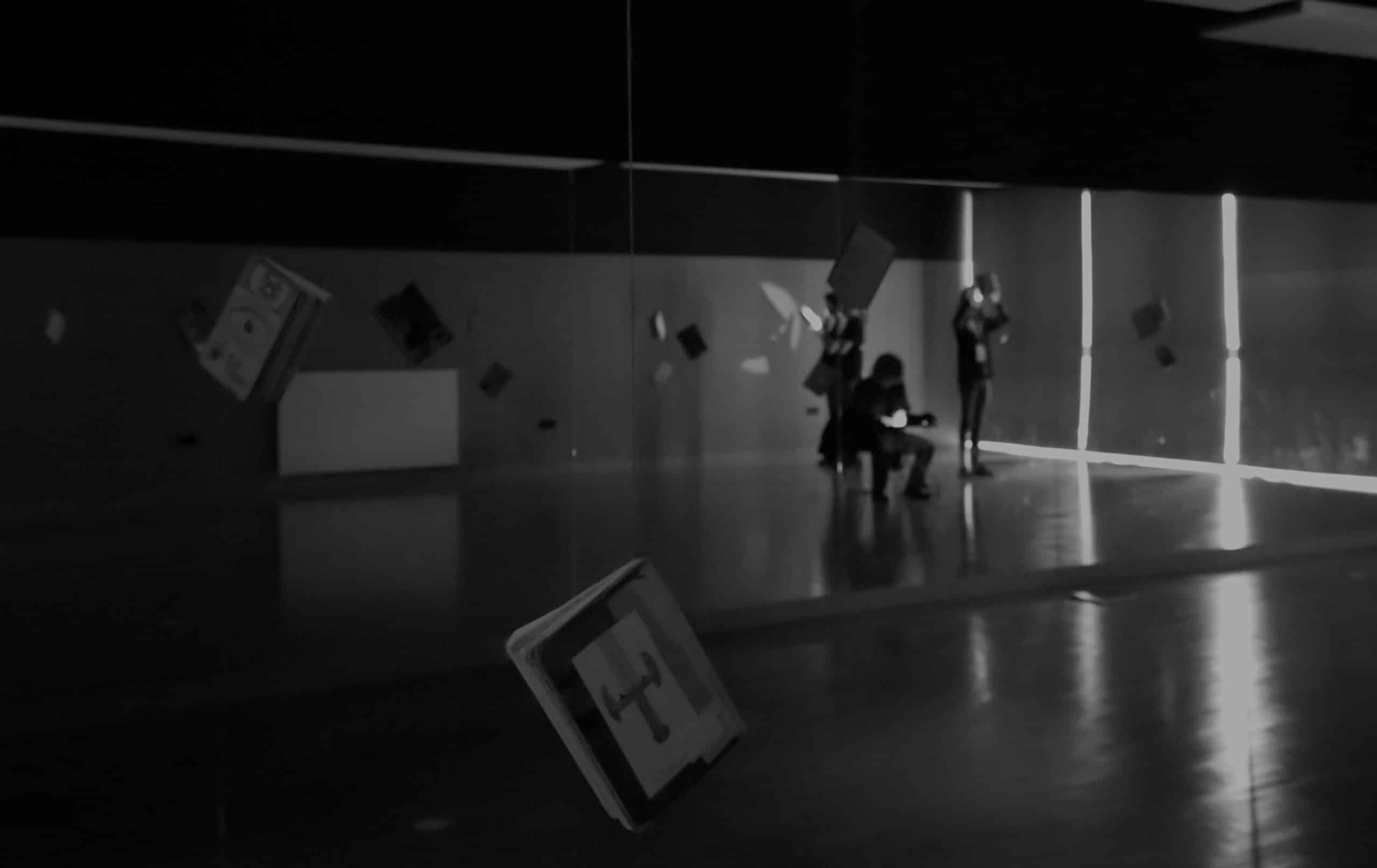
Operating at the intersection of literature and performative art, this work represents an attempt by the artist to capture and track their evolving identity over a lifetime through writing and note-taking.
Initially, recording thoughts, ideas, and inspirations served purely as a tool - preparatory material for my art. It was a subconscious practice cultivated since childhood,where I gradually began adding words to my childhood drawings.
Today, we know that the regular practice of unstructured, free-form writingexpresive writingfosters and can even enhance an individual's psychophysical well-being (Pennebaker, Beall, 1986).
Having accumulated dozens of notebooks filled with thoughts, feelings, drawings, and inner states- unsuited for literary publication, yet carrying a profound emotional weight - I decided to translate this material into performative art.
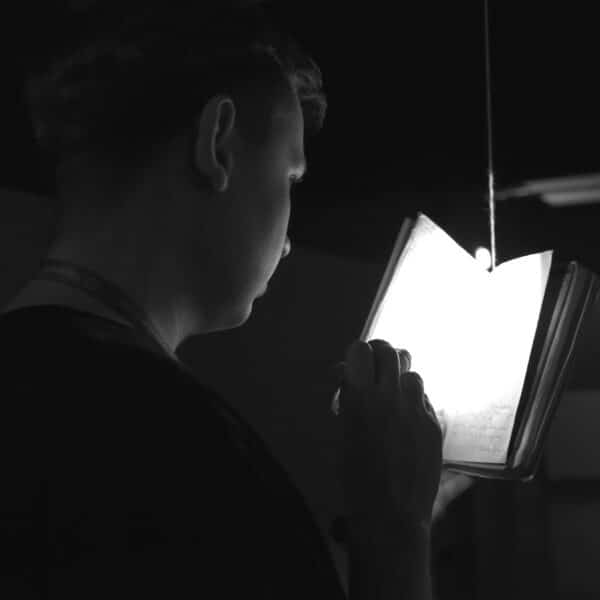
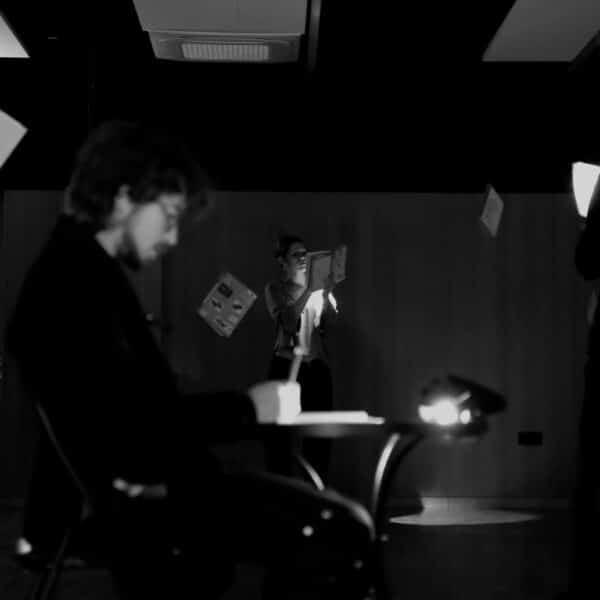
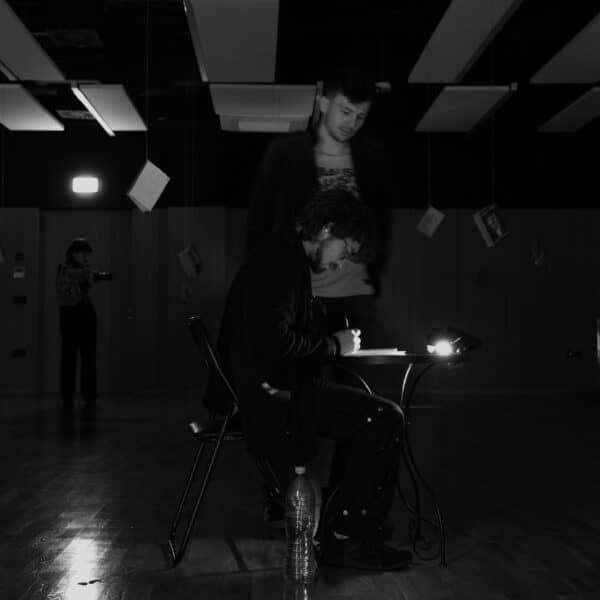
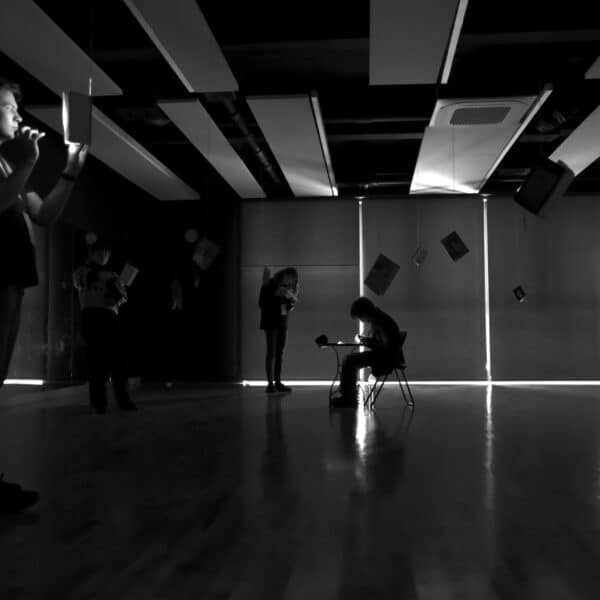
Guests are invited into the creative space, into the backstage of literature,right into the middle of an ongoing process. Entering a darkened room with flashlights, they discover the artist’s notes scattered in various spots. At the center of the space, illuminated by a single small lamp and wearing headphones, sits a person who becomes a writer simply by writing in that pool of light. The witness is invited into the heart of the process for just a brief moment and is presented with a wealth of material to explore, thereby designing their own experience by choosing their point of focus.
Title Be(com)ing a writer references Deleuze and Guattari's (1972) concept of"becoming"as opposed to "being"According to the philosophers, in today's dynamically shifting world, it is difficult to speak of "being," as it implies a static state; instead, everything - objects and subjects, people and things, matter and ideas - is in a state of continuous flux to the extent that their original essence shifts and they become something else entirely.
The performance explores ipseity (ipse identity), which in Paul Ricoeur’s (1990) framework represents a mode of identity based not on the permanence of traits, but on one's relation to oneself as an agent of action and commitment. It is thus a self-relation across time,, grounded in memory, promise, responsibility, and narrative.
Upon leaving the performance space, guests can leave their own anonymous thoughts in writing. Encouraging audience members to engage in their own written expression serves as an integral, closing component of the performance.
Concept & Performance: Mateusz P. Barczyk
Technical Collaboration: Karina Pieniążkowska, Szymon Górkiewicz, Paweł Rymarczyk
Performance Assistance & Guest Relations: Szymon Górkiewicz, Natalia Kuc
Premiered: Katowice, DK Witosa, 23.11.2025
Photos: Julia Jastrzębsk
How the performance unfolds?

 English
 Polish